Bangladesh (/bɑːŋlɑːdɛʃ/;
 i/ˌbæŋɡləˈdæʃ/; বাংলাদেশ, pronounced: [ˈbaŋlad̪eʃ] , lit. "The land of Bengal"), officially the People's Republic of Bangladesh (গণপ্রজাতন্ত্রী বাংলাদেশ Gônôprôjatôntri Bangladesh), is a country in South Asia; and is bordered by India to its west, north and east; Burma to its southeast and separated from Nepal and Bhutan by the Chicken’s Neck corridor. To its south, it faces the Bay of Bengal. Bangladesh is the world's eighth-most populous country, with over 160 million people, and among the most densely populated countries. It forms part of the ethno-linguistic region of Bengal, along with the neighbouring Indian states of West Bengal and Tripura.
The present-day borders of Bangladesh took shape during the Partition of Bengal and British India in 1947, when the region came to be known as East Pakistan, as a part of the newly formed state of Pakistan. It was separated from West Pakistan by 1,400 km of Indian territory. Due to political exclusion, ethnic and linguistic discrimination and economic neglect by the politically dominant western wing, nationalism, popular agitation and civil disobedience led to the Bangladesh Liberation War and independence in 1971. After independence, the new state endured poverty, famine, political turmoil and military coups. The restoration of democracy in 1991 has been followed by relative calm and economic progress. In 2014, the Bangladeshi general election was boycotted by major opposition parties, resulting in a parliament and government dominated by the Awami League and its smaller coalition partners.


While the word "Bengali" is generally used to refer to people of ethnic Bengali descent in Bangladesh including those living in India and other countries, the demonym "Bangladeshi" is used to describe all citizens of Bangladesh, including non-Bengalis. The origin of the name Bengal (known as Bangla and Bongo in Bengali language) is unknown. One theory suggests that the word derives from "Bang", a Dravidian tribe that settled the region around 1000 BC.[12] The word might have been derived from the ancient kingdom of Vanga (or Banga), which came from the Austric word "Bonga" meaning the Sun-god.[13] The Indo-Aryan suffix "(-desh)" is derived from the Sanskrit word deśha- ("region, province, country") (see Desi) means "land" or "country" in Bengali language, so Bangladesh means "The land of Bengal".
The earliest reference to "Vangala" (Bangla) has been traced in the Nesari plates (805 AD) of Rashtrakuta Govinda III which speak of Dharmapala as the king of Vangala. The records of Rajendra Chola I of the Chola dynasty, who invaded Bengal in the 11th century, speak of Govindachandra as the ruler of Vangaladesa.
Bangladesh's tourist attractions include, historical and monuments, resorts, beaches, picnic spots, forests and tribal people, wildlife of various species. Bangladesh offers ample opportunities to tourists for angling, water skiing, river cruising, hiking, rowing, yachting, sea bathing as well as bringing one in close touch with pristine nature.[2][3]
In the northern part, comprising the Rajshahi division, there are archaeological sites, including the temple city Puthia in Rajshahi; the largest and most ancient archaeological site, Mahasthangarh in Bogra; the single largest Buddhist monastery, Paharpur in Naogaon; the most ornamental terracota Hindu temple in Bangladesh Kantaji Temple, and many rajbaris or palaces of old zamindars.
In the south-eastern part, which is the Chittagong division, there are natural and hilly areas like Chittagong Hill Tracts, along with sandy sea beaches. The most notable beach, in Cox's Bazar, is a contender for the title of longest unbroken sandy sea beach in the world.[4]

Cox's Bazar is the longest natural unbroken sea beach in the world.
Ministry of Tourism and The Civil Aviation Ministry designs national policies for the development and promotion of tourism. The Ministry also maintains the Beautiful Bangladesh campaign.Bangladesh Government has formed Tourist Police unit to better protect local and foreign tourists as well as look after the nature and wildlife in the tourist spots.

Slowly, I pushed the onion through the blade, almost to the end. Then I turned it to cut the other way. My fingers remained intact and the onion was sliced — not finely or perfectly, but cut. Mrs. Ali threw the onions into a hot frying pan, added dabs of a few of her spice pastes, and continued to stoke the fire just so.
I think I passed the test; a bowl of okra appeared next for me to cut.

Bangladeshi Village Life: A Taste
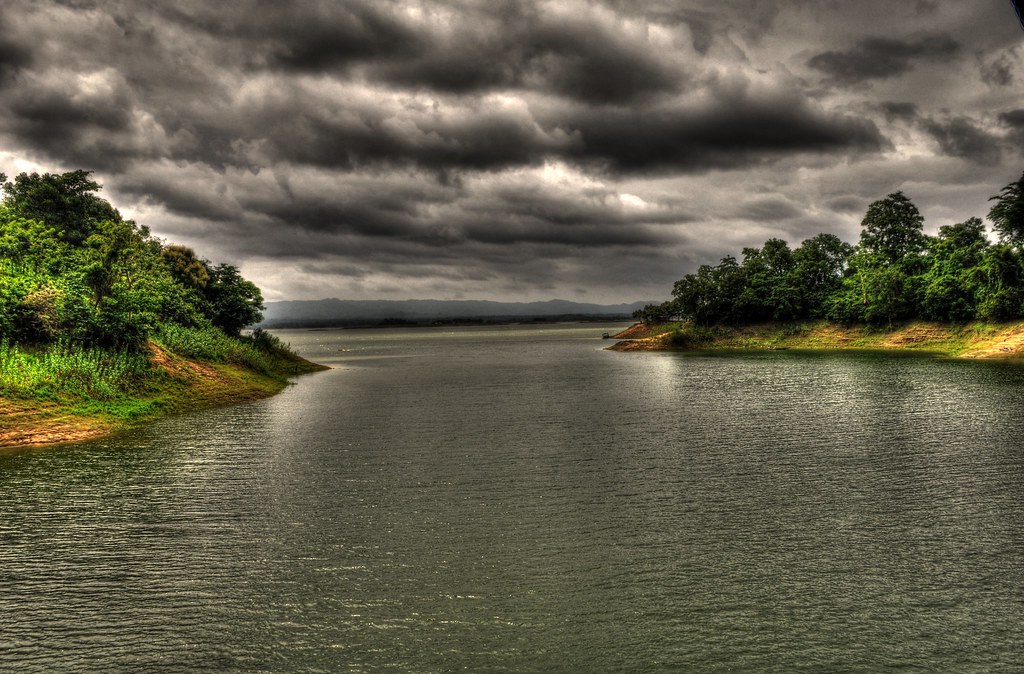
Bangladeshi cities may be bustling, crowded, and jammed with activity, but the soul of Bangladesh is in its villages and along its rivers. Villages that surprise with their calm, their order and their relative peace. Sure there’s activity — in the fields, homes, schools, mosques and temples, but there’s a different pace to it all than you’ll find in a Bangladeshi city. In the words of a friend working in development, “When I go to the Bangladesh countryside, it gives me a sense of hope.”

From Stranger to Guest
When we returned to our home stay home for the evening, we got to know our family — and they got to know us — a little better over dinner. The awkwardness of being the center of attention faded as we chatted and asked questions to get closer to understanding one another.Asmani was studying Political Science at a college in nearby Natore.
“She wants to be Prime Minister,” her brother Bappy piped in.
“Is it true?” I asked.
She nodded.
“Can I have your autograph?” Dan inquired. We all believed in the possibility, really. Asmani blushed.
Dan pushed a piece of paper in front of her. She signed it.
“One day, I can say I knew you when…”
Dinner was ready. Mrs. Ali had cooked us a multi-course feast. We had been told beforehand that the best Bangladeshi food is in a village home. As I scooped into my mouth the first finger-full of fish curry and spicy vegetable sabzi, I nodded in satisfied agreement.
School Visit
The following morning, we struck further out in the countryside to visit a couple of village schools. At our first school, we were besieged by hundreds of schoolgirls pouring out of their classrooms to greet us in their courtyard. The energy, curiosity and spirit — if only we could bottle it.

Pottery and Puffed Rice: A Lesson
Next up was a pottery village and seeing how puffed rice was made. When we agreed to this side trip, we’d imagined something a la tourist village presentation. Instead, we got another glimpse of ordinary yet fascinating village life whose pace didn’t skip a beat for our visit.Take the pottery. Throughout our visits to South Asia, we’d become big fans of doi, a sweet curd snack usually served in terra cotta containers, no matter how small the portion. Firm sweet yogurt and its bacteria tucked into little ceramic bowls — a surprisingly delicious blend.
When we arrived at the pottery village, we realized where all those doi pots had come from. Every manner of bowl, pot and container, including the very smallest were thrown by hand. This village was home to a unique Hindu caste that specialized in pottery. Master potters are able to churn out hundreds — if not thousands — of yogurt cups, pitchers and water pots in a single day.

First, one woman stirred rice kernels with hot sand in a ceramic pot atop a hot fire. When the kernels reached peak temperature and began to pop, she’d pour the sand and kernels into another ceramic container with holes just big enough to let the sand out yet small enough to trap the popped rice inside. As she did this, the remaining rice puffed just so.

Mehndi (Henna) Night
During our last night in the village, the girls of the house took over and put on a mehndi (henna) party in our room. My hands were soon transformed into a canvas of flowers and designs with the help Asmani and her cousin. Soon, the room was filled with the entire extended family.The father and son took an interest in learning how to take photos with our camera. At first, they were overwhelmed. Then, they were downright addicted. Grandma, too, took an interest — in convincing Dan to let Asmani mendhi his hands (he finally succumbed to allowing a single pinkytip).
Grandma covered my head with my scarf and joked, “Now you are a Bangladeshi woman.”

Life in a Bangladeshi village. In just a few days, I’d seen family, education, life, agriculture and industry up close.
And I met a young woman from the village who embodies its hope. She believes she can be Prime Minister. That’s her dream.
As she makes her way, I’ll be sure to keep her autograph.
To know more click this link:
Touring Bangladesh
To know the news the of Bangladesh:
Bangladesh News

No comments:
Post a Comment